I’ll believe it when I see it

1418072_25704364

“I’ll believe it when I see it!” They were my words the last time someone told me we were going to have a hot, sunny weekend!  There are some things that we find hard to believe without seeing the evidence.  Most weeks there is a new scientific “discovery” reported in the papers and we feel we are closer to understanding everything there is. But actually, the more scientists discover, the more they realise still eludes us.  We still have no idea what most of the universe is made of, we don’t know how it started and we don’t understand why it seems to be so finely tuned as to allow for our existence. The nature of time eludes us and ageing is still a puzzle. We don’t understand the human brain – how can a mass of nerve cells produce a symphony, or appreciate the beauty of a sunset?  So where does this leave us?  Acknowledging our lack of understanding is the foundation of faith. In fact, just because the universe is so incomprehensible, we are inspired to believe in something bigger.  Albert Einstein said “That deep emotional conviction of the presence of a superior reasoning power, which is revealed in the incomprehensible universe, forms my idea of God.”  So what if there really is a God?  What is He like and can I know Him? Does it matter anyway?  If you want to find out – come to a local Church on Sunday morning. Doubters welcome!

Wendy Hill

Kings Lynn Christian Fellowship

100% Death Rate

1414416_28489993

What do you feel about the health controllers who want to legislate our food into being good for us? Those who want to ban salt in processed food, for example. They tell us how many thousands of lives will be saved if we all follow their directives. I’m all in favour of healthy eating and when I get my fish and chips I like to put the salt and vinegar on them myself! But the serious point is the fallacy that we can make ourselves immortal. The death rate is 100% – we shall all die and ignoring that truth doesn’t help live a full life.
We shall all die and how we face that truth affects how we live our lives now. Is death extinction, or a new and greater adventure in life? Our answer that question makes a great deal of difference to how we live every day. I dislike Henry Scott-Holland’s poem, “All is Well.” It begins “death is nothing at all,” but it is taken to mean, “bereavement is nothing at all,” which it certainly isn’t. Grief is devastating and trying to pretend that the death of someone we love doesn’t affect us is no way to find healing. But if there is infinitely more to life than surviving another day, then each day can be illuminated by the reality of eternal life. That is the hope and the joy that Jesus offers.
Chris Ivory
King’s Lynn Minster

Baptism

Baptism
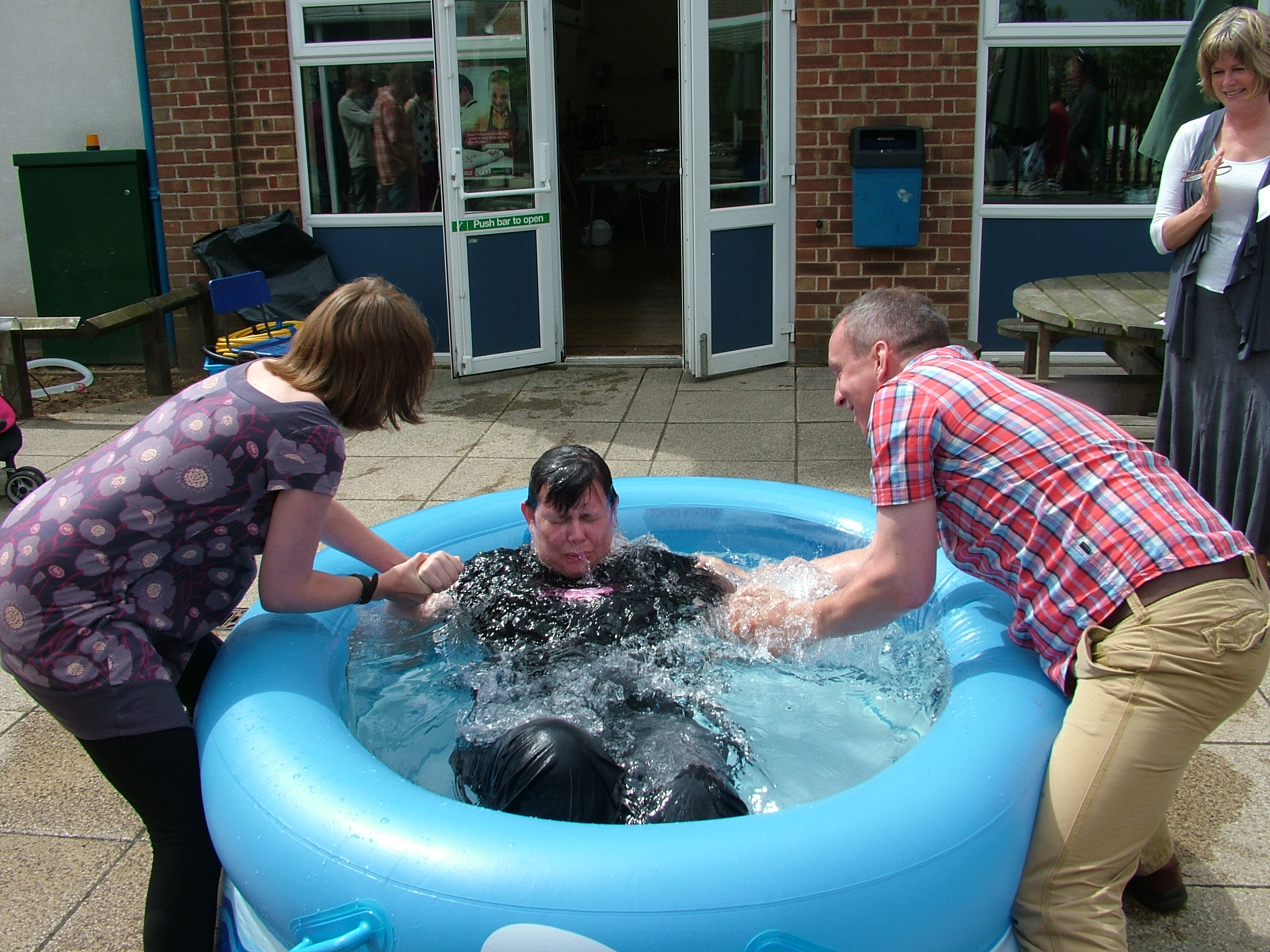
We had a great Sunday meeting this week – we baptised four new Christians from four different nations in a birthing pool! In Jesus’ day it would have been in the river Jordan – but we figured the Ouse would be a bit cold and mucky, so we settled for an inflatable pool. In our church fellowship we baptise by full immersion, because that’s what the word means.
The word baptise is purely a religious word in English but in the ancient Greek it is an earthy normal word that means to dip or immerse with a sense of a change of identity occurring. There’s an ancient recipe for pickling onions that involves onions being baptised in vinegar!
Going down under water in baptism is powerfully symbolic of the massive change that happens when someone becomes a Christian. It’s a burial service for the old you – 1 Corinthians tells us that if anyone is in Christ he is a new creation, the old has gone and the new has come. That’s what it means to be born again. Being born again is a second chance at life with a clean slate and the power of the Spirit for a better life. We can have that chance because Jesus died for our sins and rose again defeating the power of sin and death in the lives of believers.
The water was cold on Sunday, but the joy of new life was evident on their faces. Do you need a second chance at life?

Andy Moyle
The Gateway Church

Bringing the Nations Together

The horrific attack on a soldier in Woolwich and subsequent protests by the English Defence League was an attempt to drive a wedge between races. That wedge has been around since the Tower of Babel in Old Testament times.

The tower of Babel is a fascinating narrative – human pride and rejection of God meant those early peoples were trying to build a tower to be as high as God. So God separated them into different people groups and languages to thwart their plan. We often call that the curse of Babel. That curse was reversed when Jesus died on the cross, rose again and sent the Holy Spirit to dwell in believers. At Pentecost, when the early believers first spoke in tongues – the nations around could understand the good news of the gospel in their own language!

The gospel is wonderfully unifying – Paul wrote there is neither Greek nor Jew – all are one in Christ, the dividing wall of hostility has been broken down by Jesus. The Church is made up of different nations, one in their faith in Christ! The wedge has gone – indeed we are delighted in our church to have over nine nations represented. It makes for some great food evenings!

Don’t let the extremists create a wedge between cultures, but recognise that ultimately only Christ can bring us together

Andy Moyle
The Gateway Church

No Jobs, No Cash and no Hope?

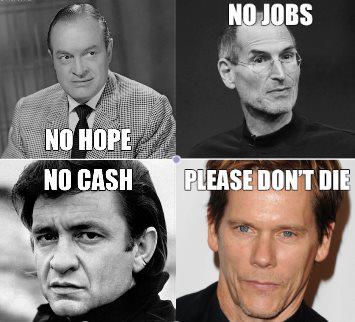
jobs-hope-cash-baconTen years ago we had Steve Jobs, Johnny Cash and Bob Hope. Now we have no jobs, no cash and no hope… Please don’t let Kevin Bacon die!

What can be worse than no jobs, no cash and no hope? How about 7.6 million unborn children aborted since 1967 in the UK. Or the way the political and cultural “elite” have made gay marriage an issue on which “no dissent can be brooked”. Or that last month 170 people needed a food parcel in King’s Lynn. Or that this week a religious extremist beheaded a soldier on a London street. What has our nation come to?

At least three things give me great hope that our nation can be changed.

1) Look for the helpers – the lady who prayed over the dead soldier and the cub scout leader who tried to stall the extremist from committing more atrocity by talking him down. Wherever there is evil, there is good helping and overcoming. The Bible tells us that “where sin abounds, grace abound more.”

2) A church in South Wales is experiencing an outpouring of the Holy Spirit that has seen 300 become Christians and numerous verifiable hearings in the last month. We are praying for the same to happen here in Lynn too.

3) Churches can’t give out jobs or cash, but Jesus Christ gives a hope that is sure and certain. And bacon too – more than one local church has regular bacon butty Sundays. What better way to start your Sunday than a bacon butty and worshipping Jesus who changes lives and fills us with love and power to change a sin-sick world for good.

Andy Moyle

The Gateway Church

Gods Rock Song

waynes-world
When I was a teenager I got an electric guitar for my birthday. I grew up playing and listening to rock music, and even though I’m some way past my teenage years now, I still enjoy a good rock song.
Many rock songs are written with a strong image in mind. You can see this in the titles – “Smoke on the Water”, “Purple Haze”, “Stairway to Heaven”. They give the mind’s eye something to look at, as well as giving the ear something to listen to.
The original Rock Song comes not from Led Zeppelin or Jimi Hendrix but from Moses. His song is recorded in Deuteronomy chapter 32, and include the lyrics “Oh, praise the greatness of our God! He is the Rock…” The image at the centre of this song could not be stronger – God is as solid and monumental as anything Moses had seen in the crags and foothills of the desert.
The song describes God’s character as Moses had come to know him. The challenge to the modern-day reader is to get to know this same God, dependable as a rock in an otherwise shifting world.

Corin Child
St John’s

Perfect Being or Being Perfect.

In this reality, the imperfect meets the perfect. Meeting the perfect produces pain, suffering and death. Whenever things go wrong we assume that it’s because we are not perfect. We would like to be perfect, but who can even imagine what perfection, in all its infinite diversity, would look like? Consider health.

Whose mind is capable of seeing in real time the precise molecular changes which keep the human body alive? If we strive to achieve perfection by setting ourselves unrealistic goals and failing to achieve them, we risk mental illness through what psychologist call “perfectionism”. We need to be saved.
The first thing to say about perfection is that it’s someone or something else. It’s the altruistic Jesus Christ to me. In the NHS, the current path to perfection is through standards and research results which someone else has worked for and painstakingly written down. But science does not equal compassion.
The constant change required to adopt new standards is painful for staff but good for patients. NHS front line staff training should select people who are compassionate, their workload should be reasonable and they should be nurtured and supported.

If some NHS workers are overburdened the answer is in the gospels. Jesus says; ‘Come to me all you who labour and are overburdened, and I will give you rest’, Matthew 11, 28.

Peter Coates

Truth and Lies about poverty

The Truth and Lies About Poverty
There is much in the media these days, particularly in the right wing press, on the subject of benefit scroungers, the unemployed and poverty. I read an interesting report “The Truth and Lies about Poverty” recently by four Churches in the UK and I have copied the conclusions of the report below.

POLITICAL LIES ABOUT POVERTY; SHATTERING THE MYTHS BELIEVED BY CHURCHGOERS AND THE PUBLIC.
“The lies we tell ourselves”

A coalition of the Baptist Union of Great Britain, the Methodist Church, the Church of Scotland and the United Reformed Church call for the language of public debate to match the reality of people’s lives. A task which must put the lived experience of poverty at its heart, and be committed to truthfulness.

Myth 1

‘They’ are lazy and don’t want to work.

The most commonly cited cause of child poverty by churchgoers and the general public alike is that “their parents don’t want to work”. Yet the majority of children in poverty are from working households. In work poverty is now more common than out of work poverty. It is readily accepted that across the country there are families in which three generations have never worked. Examples of such families have not been found, and the evidence suggests it is unlikely we ever will. How did we come to believe these things?

Myth 2

‘They’ are addicted to drink and drugs.

Churchgoers and the wider public cite addiction as the second most common cause of child poverty. While addiction is devastating for the families and communities touched by it, fewer than 4% of benefit claimants report any form of addiction. How did we come to believe this is such a big factor in the lives of the 13 million people who live in poverty in the UK today?

Myth 3

‘They’ are not really poor – they just don’t manage their money properly.

Nearly 60% of the UK population agrees that the poor could cope if only they handled their money properly. The experience of living on a low income is one of constant struggle to manage limited resources, with small events having serious consequences. Statistics show that the poorest spend their money carefully, limiting themselves to the essentials. How did we come to believe that poverty was caused by profligacy?

Myth 4

‘They’ are on the fiddle

Over 80% of the UK population believe that “large numbers falsely claim benefits”. Benefit fraud has decreased to historically low levels – the kind of levels that the tax system can only dream of. Less than 0.9% of the welfare budget is lost to fraud. The fact is that if everyone claimed and was paid correctly, the welfare system would cost around £18 billion more. So how did we come to see welfare claimants as fraudulent scroungers?

Myth 5

‘They’ have an easy life

Over half the British public believes benefits are too high and churchgoers tend to agree. Government ministers speak of families opting for benefits as a lifestyle choice. Yet we know that benefits do not meet minimum income standards. They have halved in value relative to average incomes over the last 30 years. We know the ill and the unemployed are the people least satisfied and happy with life. Why have we come to believe that large numbers of families would choose this a lifestyle?

Myth 6

‘They’ caused the deficit.

The proportion of our tax bills spent on welfare has remained stable for the last 20 years. It is ridiculous to argue, as some have, that increasing welfare spending is responsible for the current deficit. Public debt is a problem but why is it being laid at the feet of the poorest?

CONCLUSION

As a coalition of major British Churches, we want to create a new story; one grounded in truth, compassion and hope. Part of our calling as Christians is to seek after truth, and that means facing up to our own blindness as well as calling others to account.

Collectively we have come to believe things about poverty in the UK which are not grounded in fact. We need to develop an understanding of the depth and breadth of UK poverty that is compatible with the evidence available.

Just as importantly we need to match the language of public debate with the reality of people’s lives. It is a task we must approach with humility; one which puts the lived experience of poverty at its heart, and one which is committed to truthfulness – no matter how uncomfortable we find those truths to be. Please join with us in this challenge.


The Power of Example

Beckham's Tattoos
Beckham’s Tattoos

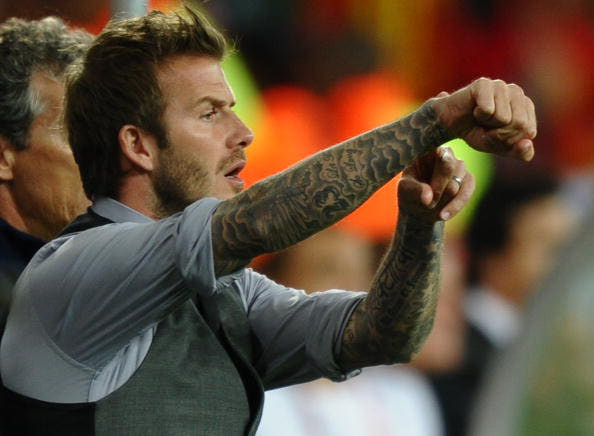
David Beckham expressed surprise recently when his 10 year old son asked if he could have a tattoo. With two fully tattooed arms himself that’s not really surprising! The power of example is strong, and as the old saying goes, “children hear what you say, but believe what you do”, a sobering thought for parents!

I lived abroad, in a country where the Highway Code existed but was definitely not adhered to. The first time I saw a car take a shortcut the wrong way around a roundabout, I was shocked. Soon realising this was common practice, I got used to it. One day I approached a roundabout, it was quiet, and the thought entered my head to take the shortcut and go the wrong way. Not long ago that had been inconceivable to me but the power of example had exerted its force over me and was now influencing my behaviour!

All of us need role models. For any person to be an example worth following, what they say and what they do need to match up. Jesus had some strong words for religious leaders who were good at telling people what to do, but not so good at actually doing it. Jesus set the ultimate example, so often his actions spoke much louder than His words, the final expression of this being his willingness to lay down His own life on our behalf, so that death no longer had any power over us. Try reading what Jesus actually said and did whilst on earth, that’s an example worth following!

Claire Dallas
King’s Lynn Christian Fellowship

River of life

Amazon

In my many trips to the Amazon churches in Brazil I have heard many stories. One that I am reminded of at Easter is the story of a missionary visiting a new tribe who lived on land almost totally surrounded by fast flowing rivers.
The tribe believed the river was the home of evil spirits and although an epidemic was raging through the tribe they would not cross the river for fear, to get help.
The missionary had to find a way to get them to medical help and so as they watched him as he waded out into the river. They would not follow him. He dived under the waters and swam emerging by the bank on the other side. Lifting his arms he cried “Come on”.
Seeing he had discredited their fears, they cheered and followed him through the waters. The great news of Easter is that Jesus went through the river of death, submerging into it, crossing over it and rising again on the other side. Romans 6:11. Easter proves Jesus is the resurrection and the life, he kicked the ends out of the grave and turned a dead end street into a highway to heaven for all who will trust and follow him. Happy Easter.

Paul Randerson, Senior Pastor
Kings Lynn Christian Fellowship